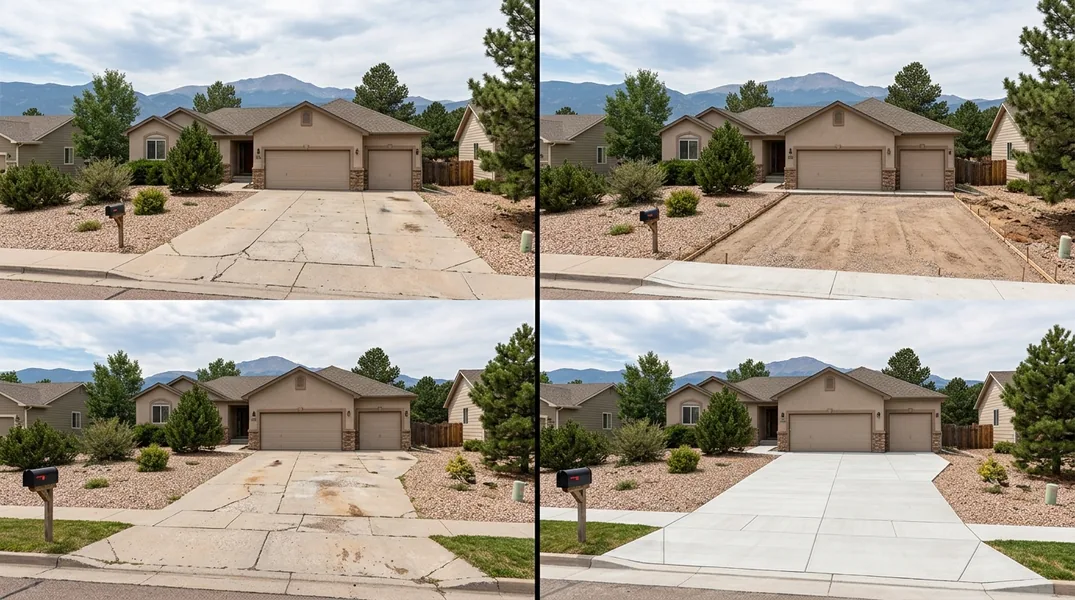
Understanding Colorado Springs' Unique Climate for Concrete Work
When planning a concrete project in Colorado Springs, understanding the local climate is essential to success. Unlike many parts of the country, Colorado Springs sits at an elevation of approximately 6,035 feet above sea level, which creates unique challenges for concrete pouring and curing. The high altitude means lower atmospheric pressure, faster evaporation rates, and more intense UV exposure. These factors directly impact how concrete sets and hardens, making timing and weather conditions critical considerations for any project.
The region also experiences dramatic temperature swings throughout the year, with winters bringing freezing temperatures and summers offering warm, dry conditions. Spring and fall can be unpredictable, with sudden temperature drops or unexpected precipitation. For homeowners considering Concrete Driveways or other concrete work, these climate patterns mean that when to pour concrete colorado is not a one-size-fits-all answer. Working with an experienced Colorado Springs concrete contractor who understands local conditions is invaluable.
The Ideal Concrete Pouring Season in Colorado Springs
The concrete pouring season colorado springs typically runs from late spring through early fall, with the absolute best window being June through September. During these months, daytime temperatures consistently stay above 50 degrees Fahrenheit, which is the minimum temperature threshold for proper concrete curing. When concrete is poured in cooler conditions, the chemical reaction that hardens the material slows dramatically, potentially leading to weak spots, surface damage, or incomplete curing. Summer months in Colorado Springs provide warm, predictable weather that allows concrete to cure at an optimal rate, typically reaching full strength within 28 days.
While late May and early September can work, they come with higher risk. Late spring can still bring unexpected cold snaps or afternoon hail storms, both of which can damage fresh concrete. Early September occasionally sees temperature drops that interfere with proper curing. July and August are the safest months, offering consistent warmth and low precipitation rates. If you're planning a major project like Concrete Patios or Stamped & Decorative Concrete, scheduling during peak summer gives you the best chance of a flawless finish.
Spring Pouring: Why April and May Require Extra Caution
Spring in Colorado Springs is beautiful, but it's not ideal for concrete work. April and May bring unpredictable weather patterns that can compromise your project. Temperatures can fluctuate by 30 to 40 degrees Fahrenheit between day and night, and sudden freezes are not uncommon even in late May. When freshly poured concrete experiences a hard freeze before it has fully cured, the water in the concrete can freeze and expand, causing surface cracking, spalling, and structural weakness that may not be visible immediately.
Additionally, spring is Colorado's wettest season, with afternoon thunderstorms appearing frequently. Rain on fresh concrete can wash out the surface, create weak spots, or prevent proper bonding of finishing layers. If you absolutely must pour concrete in spring, you'll need protective coverings and potentially additional curing time. Many homeowners find it worth waiting until early June to avoid these complications. The extra few weeks ensure your Concrete Driveways or other surfaces will be built to last.
Fall and Winter: Why Late-Season Pouring Is Risky
As autumn approaches, many homeowners consider getting their concrete work done before winter sets in. However, October and November in Colorado Springs present serious challenges for concrete curing. Temperatures drop progressively, and the first freeze can arrive as early as mid-October. Once nighttime temperatures consistently fall below 50 degrees Fahrenheit, concrete curing slows to a crawl. If temperatures drop below freezing before the concrete reaches minimum strength, the project is at serious risk.
Winter pouring, from November through March, is generally not recommended in Colorado Springs unless absolutely necessary and only with specialized cold-weather protocols. These protocols include heating blankets, insulated enclosures, and special additives that increase project costs significantly. The pricing for cold-weather concrete work can be 20 to 40 percent higher than standard pouring. If you're facing a winter deadline, consulting with a professional Colorado Springs concrete contractor about feasibility and costs is essential before committing to the project.
How Altitude and Curing Weather Affect Your Project Timeline
The high altitude of Colorado Springs creates unique concrete curing weather altitude considerations that differ from lower-elevation regions. At 6,000 feet above sea level, water evaporates much faster than at sea level, which can lead to rapid surface drying while the interior of the concrete is still curing. This mismatch can cause surface cracking and reduced overall strength. The intense UV radiation at higher elevations also accelerates surface hardening, which can trap moisture inside and create weak zones within the concrete matrix.
Professional contractors account for these factors by adjusting mix designs, adding retarders to slow surface drying, and using protective coverings during the curing period. The standard 28-day curing timeline still applies, but the day-to-day management differs significantly from lower-elevation projects. Humidity levels in Colorado Springs are typically very low, which compounds evaporation challenges. For projects like Concrete Repair & Resurfacing, understanding these altitude-specific factors is crucial to achieving a durable, long-lasting result.
Planning Your Concrete Project: When to Contact a Professional
If you're considering a concrete project for your home, the best first step is to contact an experienced contractor who understands the specific demands of Colorado Springs conditions. Colorado Springs Concrete has been serving the area for years, and our team knows exactly how to navigate local weather patterns, altitude challenges, and seasonal timing to deliver exceptional results. Whether you're planning Concrete Driveways, patios, or decorative surfaces, timing your project correctly can mean the difference between a beautiful, durable installation and costly repairs down the road.
We recommend calling Colorado Springs Concrete at (719) 888-4661 to discuss your project timeline and get professional guidance tailored to your specific needs. A free estimate allows us to assess your site, discuss seasonal considerations, and provide realistic timelines and pricing for your project. Our contractors will help you understand whether your ideal project date aligns with optimal pouring conditions, or whether adjusting your timeline slightly will result in a superior final product. Don't leave your concrete project to chance. Let our team help you make the right decision for your home.
Looking for a professional tree service in Colorado Springs? Colorado Springs Concrete responds fast for all your concrete needs.
Get a Free QuoteOur services: Concrete Driveways · Concrete Patios · Stamped & Decorative Concrete